Am J Res Innov. 2026;1(1) · Review Article · Published online first · Open Access
Corresponding author: Corresponding author: Saniya Sadaf Khan · info@lifelineemed.com
Abstract
Background: Two substantial bodies of literature describe health inequity in cardiovascular and neurological disease, but they rarely meet. Cardiovascular disparities research characterises differential detection and control of hypertension, diabetes, dyslipidaemia and atrial fibrillation, and typically terminates at cardiac endpoints. Neurological disparities research characterises differential diagnosis and treatment of stroke and dementia, and typically begins at the point of neurological presentation. The causal corridor connecting them — in which undertreated vascular risk in midlife becomes cerebrovascular and neurodegenerative disease decades later — has not been synthesised as a pathway in its own right.
Objective: To synthesise evidence on the extent to which documented disparities in cardiovascular risk factor detection and control among racial and ethnic minority and rural populations contribute to observed disparities in incident stroke, vascular cognitive impairment and all-cause dementia, and to identify where in that pathway intervention is most likely to reduce inequity.
Methods: A structured review of PubMed, Embase, Web of Science and Scopus was conducted for the period January 2000 to July 2026. Eligible sources reported cardiovascular exposures or neurological outcomes stratified by race, ethnicity, or urban–rural residence in adults aged 18 years and over. Given substantial heterogeneity in exposure definitions, outcome ascertainment and analytic approach, evidence was integrated using thematic narrative synthesis rather than meta-analysis, following established guidance for narrative synthesis in systematic reviews.27,28 Reporting follows PRISMA 2020 principles.26
Results: Evidence converges on a three-component mechanism, described here as the cardiovascular “triple curse.” First, minority and rural populations carry a higher prevalence of vascular risk factors. Second, they achieve poorer control even when treated at equivalent rates: pooled national survey data show blood pressure control of 39% among non-Hispanic Black adults and 40% among Hispanic adults, against 49% among non-Hispanic White adults, despite comparable rates of awareness and antihypertensive prescription.7,8 Third, a given level of exposure appears to carry greater consequence — in a large national cohort, Black–White disparity in incident stroke was 2.90-fold at age 45 (95% CI 1.72–4.89), yet no racial disparity in stroke incidence was observed among normotensive participants at any age.2,3 Downstream, midlife vascular exposures are strongly associated with dementia: in a 33-year cohort analysis, the fraction of dementia by age 80 attributable to at least one modifiable vascular risk factor was 21.8% (95% CI 14.3–29.3) when measured at ages 45–54 and 44.0% (95% CI 30.9–57.2) at ages 65–74.15 Treatment access diverges at each node: Black and Hispanic Medicare beneficiaries with atrial fibrillation were 23% and 13% less likely respectively to initiate direct oral anticoagulants.10 Rural residence compounds every component, with stroke mortality approximately 30% higher in the most rural counties than in large central metropolitan counties.12 Critically, the pathway is modifiable: randomised intensive blood pressure control reduced mild cognitive impairment by 19%.5
Conclusions: Disparities in stroke and dementia are not fully separable from disparities in cardiovascular care; a substantial and quantifiable share is transmitted through modifiable vascular exposures accumulated decades before neurological presentation. This reframes midlife cardiovascular risk factor control in minority and rural populations as a dementia and stroke prevention strategy, and identifies blood pressure control, atrial fibrillation detection and anticoagulation equity as the highest-yield intervention points. Research priorities include intersectional analyses of race and geography, population-specific attributable fraction estimation, and trials powered to detect differential cognitive benefit in underserved populations.
Keywords: cardiovascular disease; stroke; dementia; vascular cognitive impairment; health disparities; racial and ethnic minorities; rural health; blood pressure control; atrial fibrillation; health equity
Introduction
Two literatures that do not meet
Health disparities research in cardiovascular medicine and in neurology has developed along parallel but largely non-intersecting tracks. The cardiovascular literature documents, in considerable detail, that racial and ethnic minority populations and rural residents experience higher prevalence of hypertension, diabetes, dyslipidaemia, obesity and tobacco use; receive guideline-recommended preventive therapy less often despite clinical eligibility; and achieve poorer risk factor control over time.7,8,23,34 That literature reports its outcomes largely in cardiac terms: myocardial infarction, heart failure, cardiovascular mortality.
The neurological disparities literature, meanwhile, documents that the same populations receive later dementia diagnoses, are less likely to be prescribed anti-dementia medication, are less likely to receive reperfusion therapy for acute ischaemic stroke, and participate less in post-stroke rehabilitation.19,20,24 That literature generally takes the patient up at the point of neurological presentation, treating vascular risk history as a covariate to be adjusted away rather than as the exposure of interest.
The consequence is a conceptual gap. If a 52-year-old woman with poorly controlled hypertension and undiagnosed atrial fibrillation presents at 71 with vascular cognitive impairment, the cardiovascular literature will have counted her uncontrolled blood pressure and the neurological literature will have counted her delayed dementia diagnosis, but neither will have counted the corridor between them. This review is concerned specifically with that corridor.
The modifiable fraction is large, and larger in disadvantaged populations
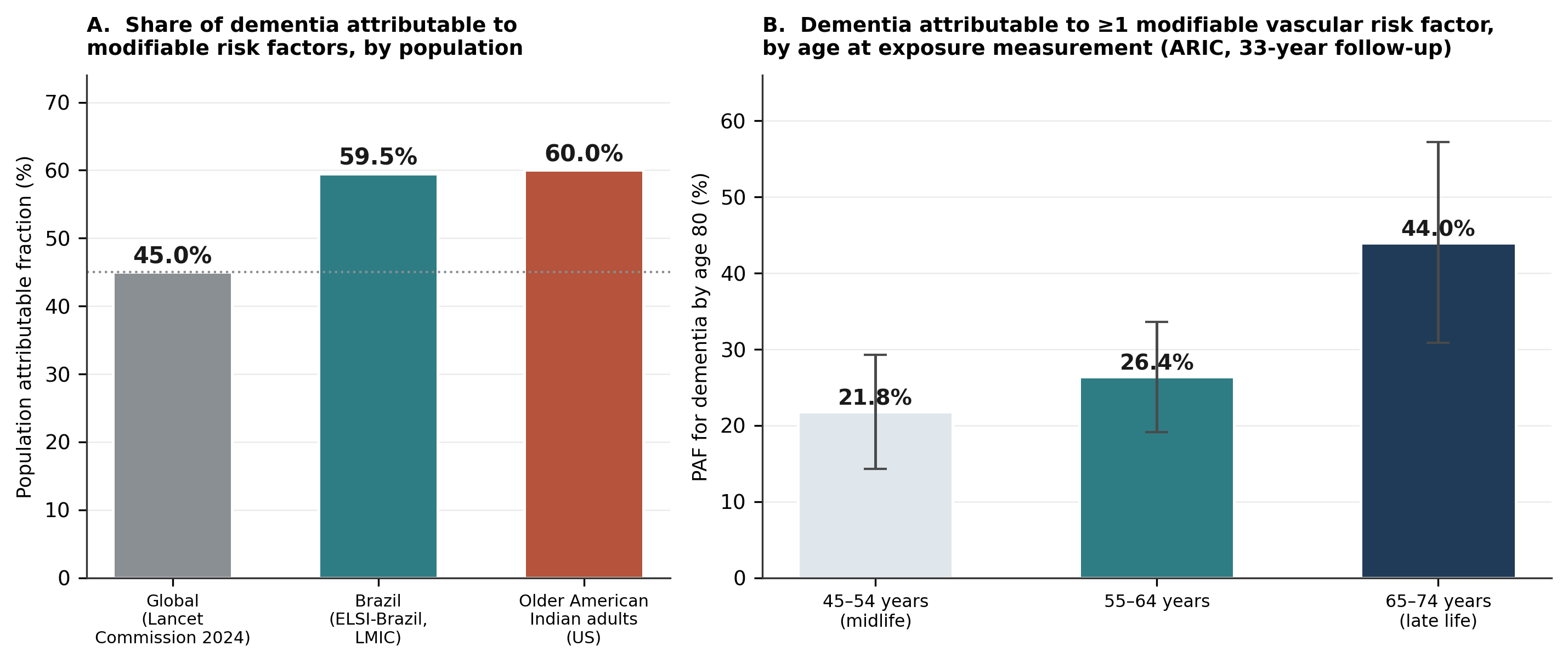
The premise that a substantial share of dementia is attributable to modifiable exposures is now well established. The 2024 report of the Lancet Standing Commission on dementia prevention, intervention and care identified 14 modifiable risk factors and estimated that approximately 45% of dementia worldwide could in principle be prevented or delayed by their elimination, with elevated midlife low-density lipoprotein cholesterol newly added and assigned a population attributable fraction of 7%.1
What is less widely appreciated — and is central to the argument of this review — is that this attributable fraction is not uniform across populations. It is systematically larger in populations bearing greater structural disadvantage, because the prevalence of the modifiable exposures is itself higher. In a nationally representative cohort of adults aged 50 and over in Brazil, the overall attributable fraction for the same 14 factors was 59.5% (95% CI 58.5–60.5).17 In a study of older American Indian adults, five factors alone — education, midlife diabetes, midlife hypertension, late-life social isolation and depression — accounted for approximately 60% of the attributable fraction, with several other Lancet Commission factors showing no association in that population.16
This has a direct and underappreciated implication. If the preventable fraction of dementia is larger in disadvantaged populations, then equitable delivery of cardiovascular prevention is not merely one intervention among many for reducing dementia inequity — it is disproportionately the intervention with the most available headroom.
Objectives
This review therefore sets out to:
- Synthesise evidence characterising disparities in the prevalence, detection and control of cardiovascular risk factors among racial and ethnic minority and rural populations;
- Establish the strength of association between those exposures and subsequent stroke, vascular cognitive impairment and all-cause dementia;
- Evaluate the extent to which disparities in cardiovascular exposure and treatment account for observed disparities in neurological outcomes;
- Assess whether interventions acting on this pathway demonstrably alter neurological outcomes; and
- Identify the points of highest intervention yield, and the principal gaps in the evidence base.
Methods
Design and reporting
This is a structured review with thematic narrative synthesis. Narrative synthesis was selected a priori rather than meta-analysis because the constituent evidence combines prospective cohort studies, cross-sectional national surveys, administrative claims analyses and randomised trials, with exposures defined variably (self-reported race, administrative race codes, county-level rurality classifications including Rural–Urban Commuting Area and National Center for Health Statistics urbanisation schemes) and outcomes ascertained by adjudication, cognitive testing, diagnosis codes or death certificates. Pooling across these designs would produce a summary estimate of low interpretability. The approach follows established guidance for narrative synthesis and thematic synthesis in systematic reviews.27,28 Reporting follows the PRISMA 2020 statement.26
Data sources and search strategy
PubMed, Embase, Web of Science and Scopus were searched for records published between 1 January 2000 and 31 July 2026. The search combined four concept blocks using controlled vocabulary (MeSH and Emtree) and free-text terms: a cardiovascular exposure block, a neurological outcome block, a disparities block, and a geography block. Reference lists of major guidelines, scientific statements and prior reviews were hand-searched. The full search architecture is presented in Table B.
Eligibility criteria
Eligible sources examined adults aged 18 years and over and reported at least one cardiovascular exposure or neurological outcome stratified by race, ethnicity or urban–rural residence. Eligible designs were prospective and retrospective cohort studies, cross-sectional national surveys, administrative claims analyses, randomised controlled trials and their secondary analyses, and methodologically rigorous evidence syntheses. Studies were excluded if restricted to paediatric populations, if consisting of case reports or small case series, if reporting no stratification by race, ethnicity or geography, or if reporting outcomes unrelated to cerebrovascular or cognitive endpoints. Full criteria appear in Table C.
Study selection and quality appraisal
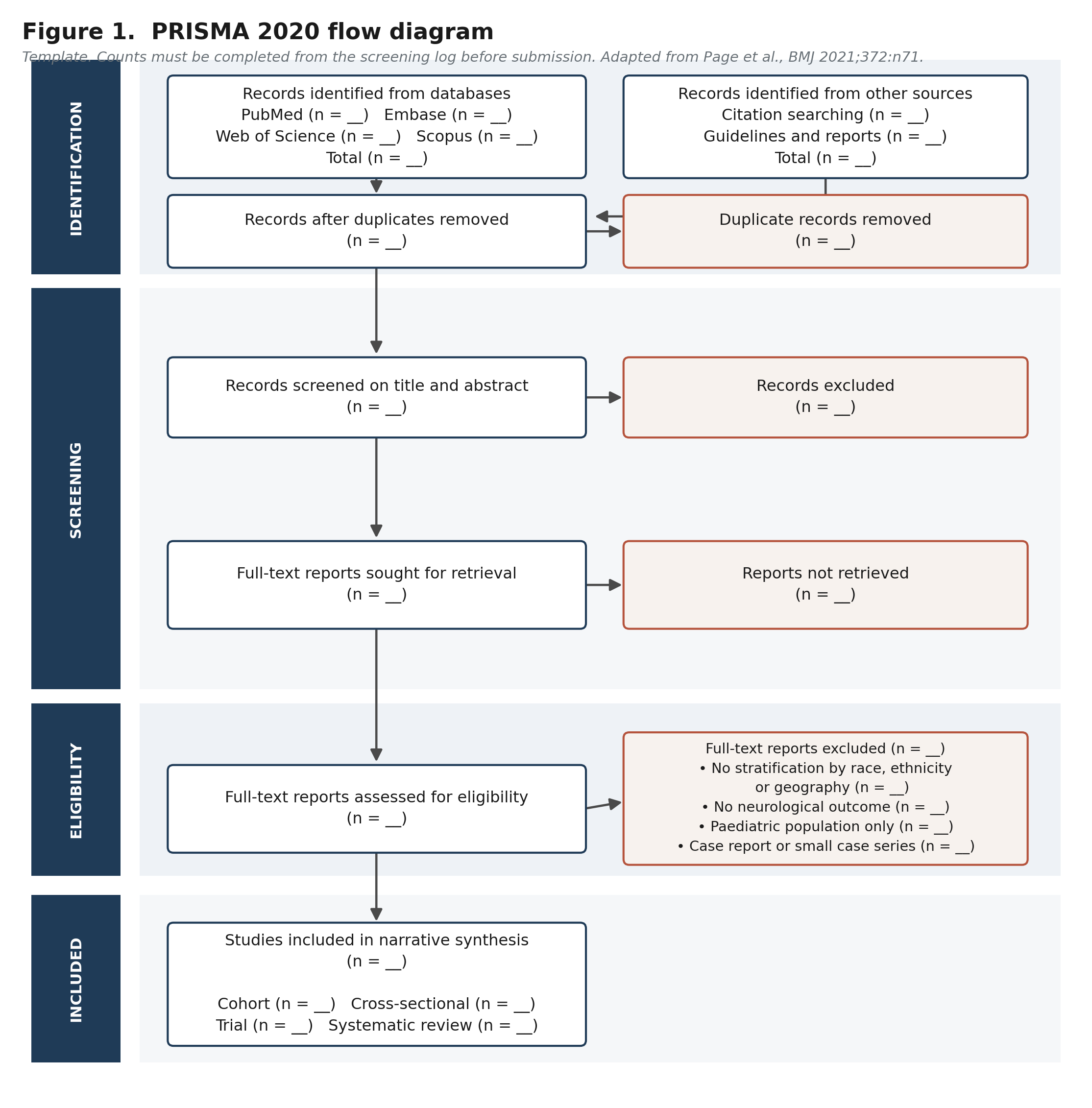
Titles and abstracts were screened against the criteria in Table C, followed by full-text assessment of potentially eligible records. Methodological quality was appraised using design-appropriate instruments: the Newcastle–Ottawa Scale for observational studies, the Cochrane Risk of Bias 2 tool for randomised trials, and AMSTAR-2 for evidence syntheses. Quality appraisal informed the weight given to individual findings in synthesis but was not applied as an exclusion criterion. The selection process is summarised in Figure 1.
Data extraction and synthesis
Data were extracted against the structured framework presented in Table D. Findings were organised into eight thematic domains corresponding to sequential nodes along the hypothesised pathway, from structural determinants through to neurological outcome. Where multiple sources addressed the same node, precedence was given to large population-based cohorts, nationally representative surveys and randomised evidence over single-centre or convenience-sampled studies.
Results
The organising construct: a cardiovascular “triple curse”
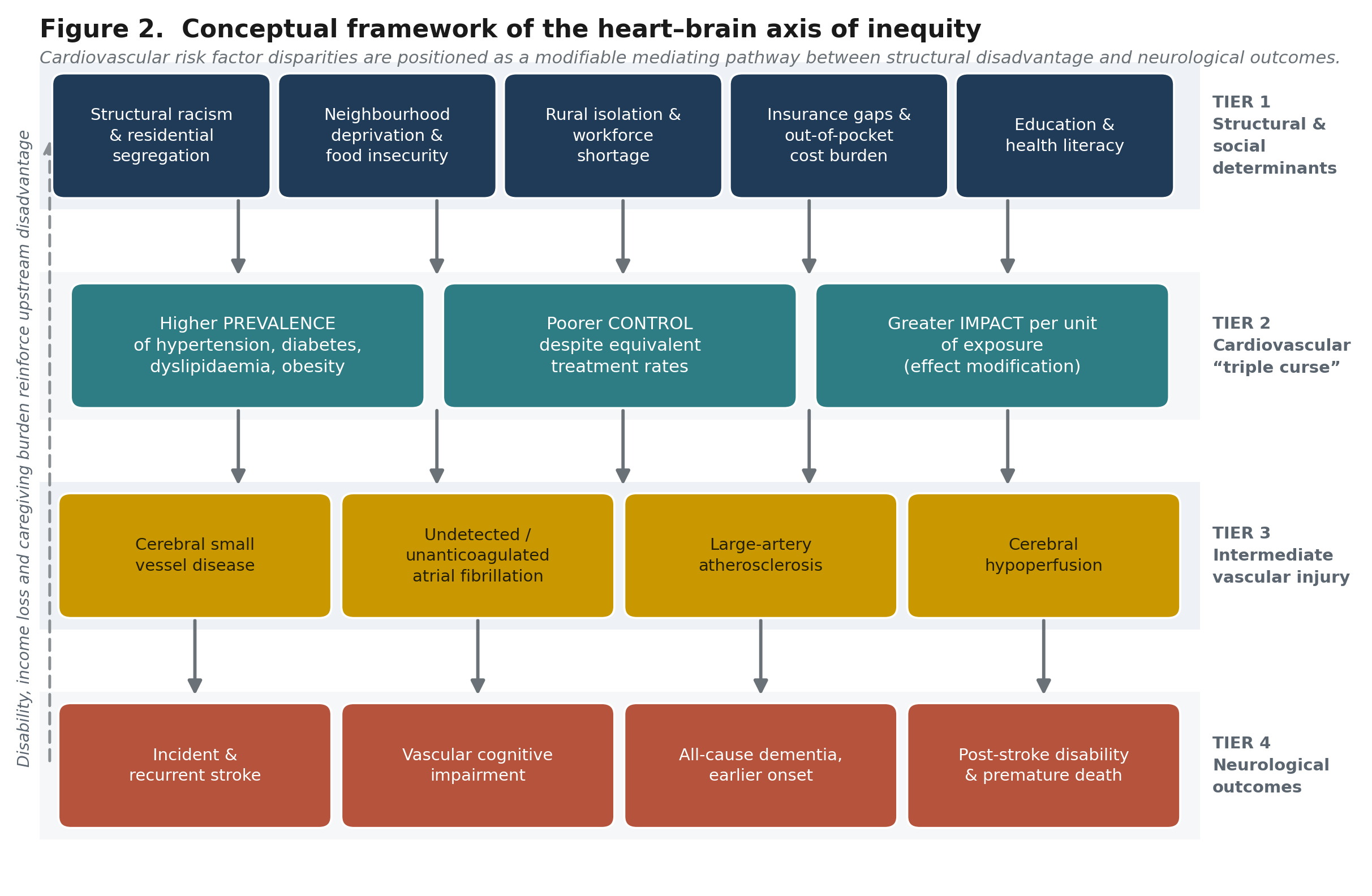
Synthesis of the retrieved evidence indicates that cardiovascular exposures contribute to neurological disparity through three distinct and additive mechanisms rather than one. This tripartite structure, first articulated in analyses of blood pressure and stroke risk in a large national cohort,3 generalises across risk factors and provides the organising framework for the results that follow. The full conceptual model is presented in Figure 2.
Component one: higher prevalence of vascular exposures
The higher prevalence of cardiovascular risk factors among racial and ethnic minority populations and rural residents is the most extensively documented and least contested component. Non-Hispanic Black adults carry the highest hypertension prevalence and the lowest control rates of any major United States population group, with disproportionate burdens of resistant, nocturnal and masked hypertension.23 American Indian and Alaska Native populations show high prevalence of diabetes and clustered cardiometabolic abnormality.16 Rural populations across racial groups demonstrate elevated prevalence of hypertension, diabetes, obesity and tobacco use relative to urban populations.11,13
These prevalence differences are themselves downstream of structural exposures rather than being primary. Residential racial segregation is prospectively associated with incident hypertension: in cohort analysis, each standard deviation increase in the county isolation index corresponded to a risk ratio for incident hypertension of 1.06 (95% CI 1.03–1.09), with neighbourhood socioeconomic status functioning as a partial mediator.25 Food insecurity, which is concentrated in both deprived urban neighbourhoods and rural food deserts, has been associated with substantially elevated odds of hypertension and diabetes in rural samples.34
Component two: poorer control despite equivalent treatment
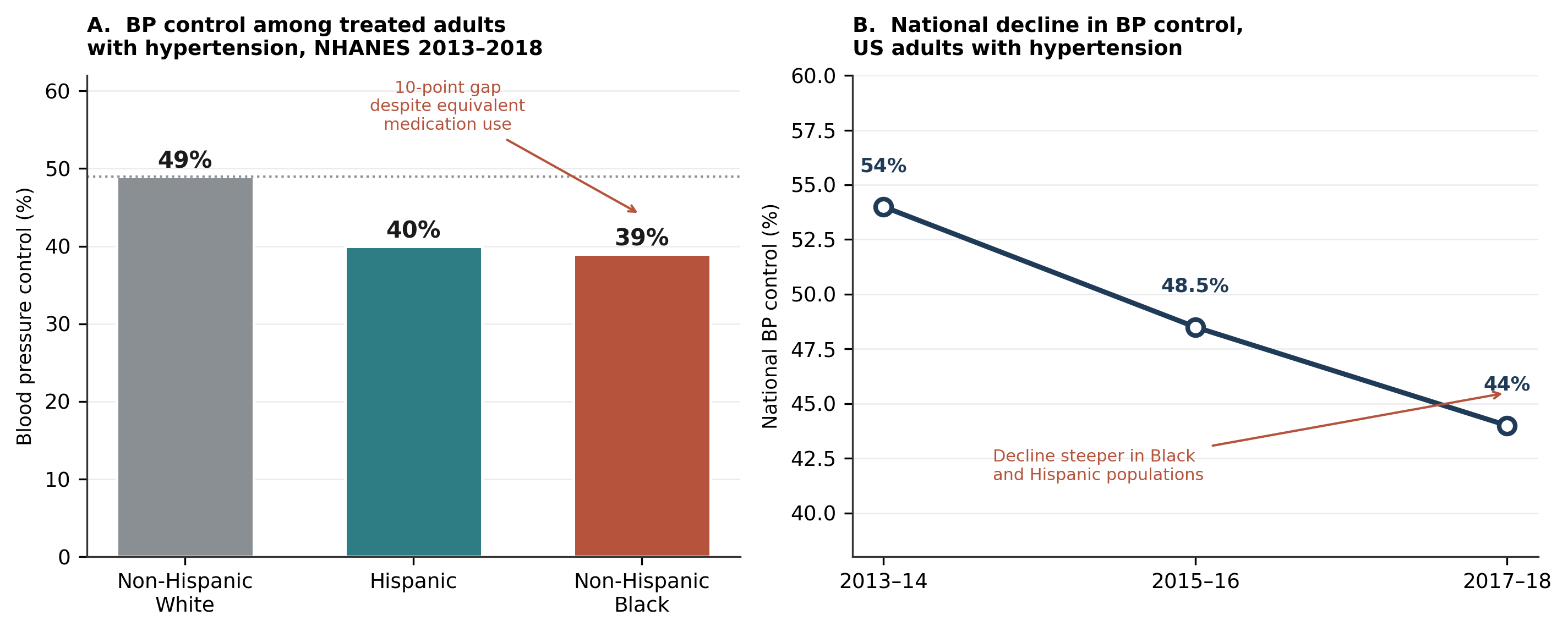
The second component is more consequential for practice because it cannot be attributed to differential access to prescription alone. Pooled national survey data covering 2013 to 2018 found blood pressure control among treated adults with hypertension of 39% in non-Hispanic Black adults and 40% in Hispanic adults, compared with 49% in non-Hispanic White adults — despite closely similar rates of hypertension awareness and of antihypertensive medication use across groups.7,34 A ten-percentage-point control gap arising downstream of equivalent prescription implicates therapeutic intensification, follow-up frequency, medication affordability and continuity of care rather than initial treatment decisions alone.
This gap is widening against a deteriorating national background. Blood pressure control among United States adults with hypertension declined from approximately 54% in 2013–2014 to approximately 44% in 2017–2018, with the decline more pronounced in Black and Hispanic communities.8 Figure 3 presents both dimensions.
Component three: greater consequence per unit of exposure
The third component is the least intuitive and the most analytically important. Evidence indicates that a given level of vascular exposure carries greater downstream consequence in populations already structurally disadvantaged — that is, effect modification rather than simple confounding.
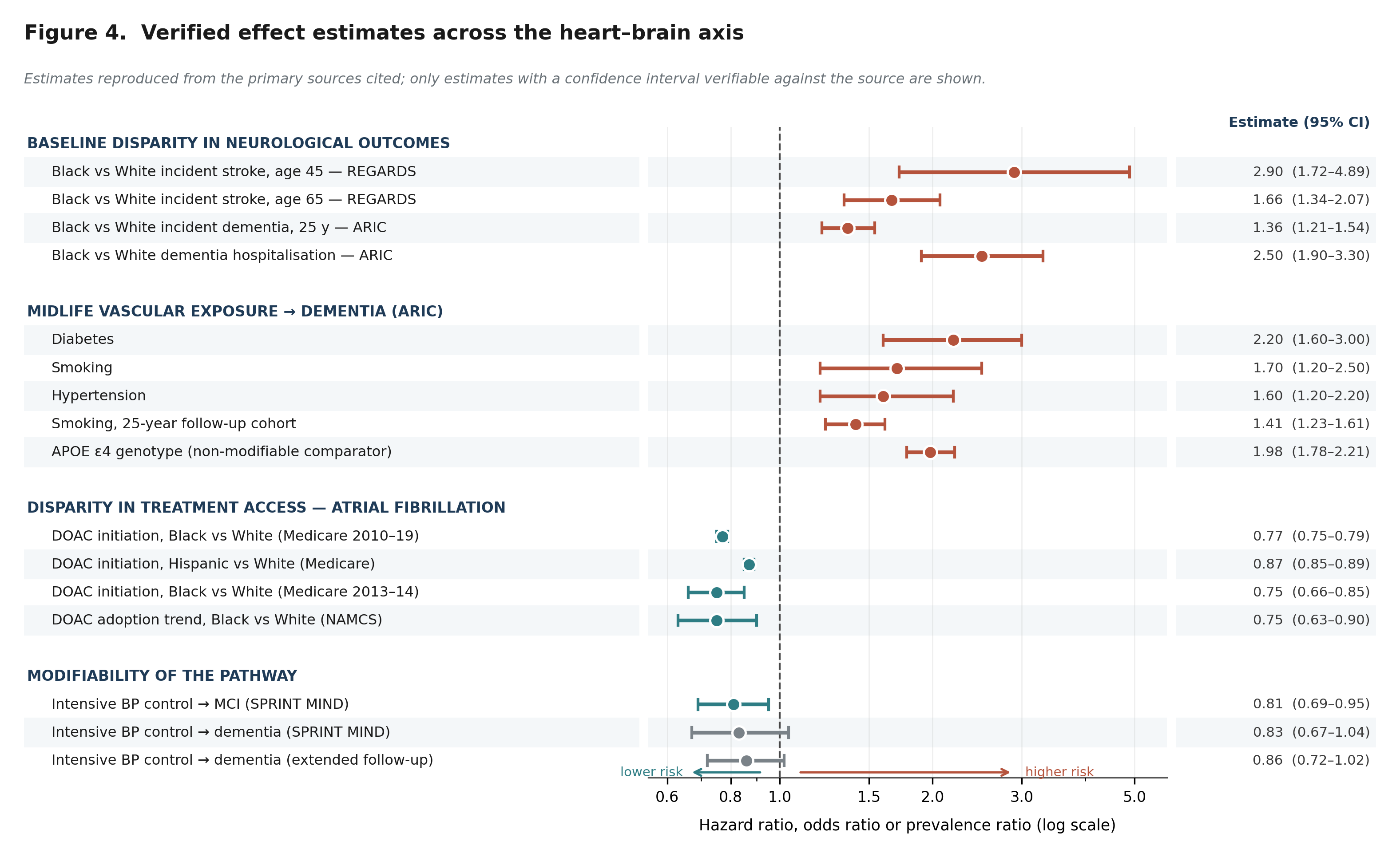
In a large national cohort of Black and White adults, incident stroke risk was 2.90-fold higher in Black than White participants at age 45 (95% CI 1.72–4.89), attenuating to 1.66-fold at age 65 (95% CI 1.34–2.07).2 Adjustment for traditional risk factors accounted for approximately half of this disparity. The observation of greatest interest, however, concerns the normotensive stratum: among participants with normal blood pressure, no racial disparity in incident stroke was detected at any age.3 The authors characterised hypertension as a “triple curse” for stroke risk — higher prevalence, poorer control, and larger effect per unit of exposure — with the disparity in stroke incidence widening at higher systolic pressures and most pronounced among adults aged 45 to 64.
This finding carries a strong implication. If disparity disappears in the normotensive stratum, then blood pressure control is not one contributor among many to the stroke disparity; within that cohort it is close to a necessary condition for it. The corollary is that equitable blood pressure control would be expected to compress a substantial portion of the stroke gap.
Atrial fibrillation: the node where detection and treatment disparity compound
Atrial fibrillation warrants separate treatment because it is the point at which a cardiac diagnosis translates most directly and most preventably into a neurological event, and because disparity operates at both detection and treatment.
In a retrospective cohort of 950,698 anticoagulation initiation episodes among Medicare beneficiaries with atrial fibrillation between 2010 and 2019, Black patients were 23% less likely (adjusted OR 0.77; 95% CI 0.75–0.79) and Hispanic patients 13% less likely (adjusted OR 0.87; 95% CI 0.85–0.89) to initiate direct oral anticoagulants rather than warfarin.10 Notably, these disparities attenuated over the study period and had largely dissipated by 2019, indicating that this particular gap is responsive to change.
Other data are less reassuring. In an earlier Medicare cohort, overall anticoagulation initiation was low across all groups at 49.5%, and among those anticoagulated, direct oral anticoagulants were initiated in 42.9% of White patients but only 29.4% of Black patients (adjusted OR 0.75; 95% CI 0.66–0.85), with the difference persisting after adjustment for socioeconomic status.9 Ambulatory care survey data covering 2011 to 2019 found the rate of direct oral anticoagulant adoption slower among non-Hispanic Black than non-Hispanic White patients (adjusted prevalence ratio 0.75; 95% CI 0.63–0.90) — that is, a widening rather than narrowing gap — and markedly lower use among Medicaid-insured patients.29 Disparity extends beyond anticoagulation to rhythm control: nationwide analysis found Black race and Hispanic ethnicity associated with 11% and 27% lower odds respectively of receiving catheter ablation.30
Because anticoagulation in atrial fibrillation is among the most effective stroke prevention interventions in medicine, differential uptake at this node translates with unusual directness into differential stroke incidence.
The downstream link: vascular exposure and dementia
The association between midlife vascular exposure and late-life cognitive outcome is robust and has been quantified in long-running cohorts. In a community-based cohort followed for 25 years, midlife smoking was associated with incident dementia at a hazard ratio of 1.41 (95% CI 1.23–1.61), and Black race with a hazard ratio of 1.36 (95% CI 1.21–1.54), against an APOE ε4 hazard ratio of 1.98 (95% CI 1.78–2.21).4 That modifiable midlife vascular exposures produce effect sizes of the same order as the principal genetic risk factor is itself a significant observation for prevention policy.
In earlier analysis from the same cohort, dementia hospitalisation was 2.5-fold more likely in African American than White participants (95% CI 1.9–3.3), with hypertension (HR 1.6; 95% CI 1.2–2.2), diabetes (HR 2.2; 95% CI 1.6–3.0) and smoking (HR 1.7; 95% CI 1.2–2.5) all strongly associated with dementia in both racial groups.18
Most directly relevant to the present argument, a 33-year cohort analysis quantified the fraction of dementia by age 80 attributable to at least one modifiable vascular risk factor as 21.8% when exposures were measured at ages 45–54 (95% CI 14.3–29.3), 26.4% at ages 55–64 (95% CI 19.1–33.6) and 44.0% at ages 65–74 (95% CI 30.9–57.2).15 Figure 5 presents these estimates alongside the population-level variation in total attributable fraction described in Section 1.2.
Geography as an independent and compounding axis
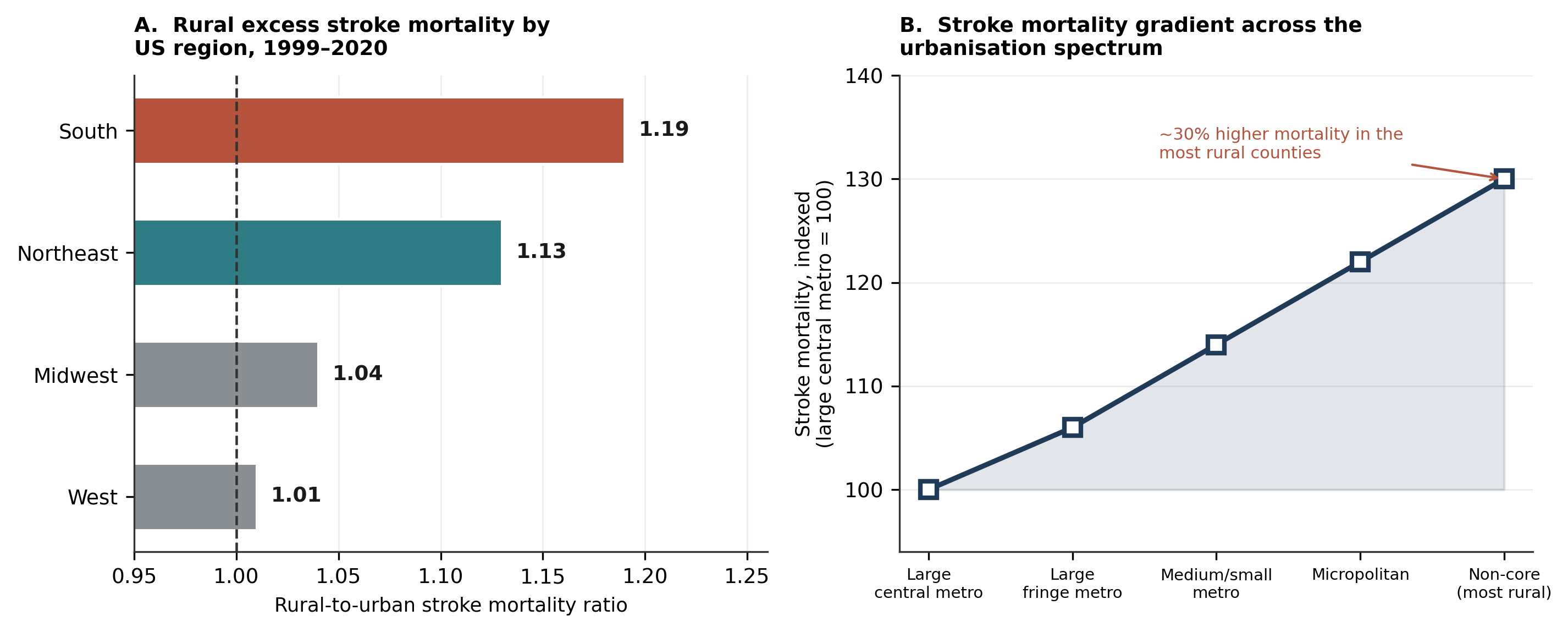
Rural residence operates on this pathway as an independent axis that compounds rather than merely parallels racial and ethnic disparity. Stroke mortality rises monotonically across the urbanisation spectrum, with mortality approximately 30% higher in the most rural counties than in large central metropolitan counties.12 Regional analysis of two decades of mortality data found the highest rural-to-urban stroke mortality ratio in the Southern United States at 1.19, followed by the Northeast at 1.13, the Midwest at 1.04 and the West at 1.01.14
The temporal pattern is not one of steady convergence. The rural–urban disparity in stroke mortality widened from approximately 15% to 25% between 1999 and 2010 before narrowing to approximately 8% by 2019, a narrowing driven substantially by a plateau in urban stroke mortality rather than by accelerated rural improvement.13 More recent analysis of adults aged 25 to 64 found stroke mortality declining until approximately 2013 and rising thereafter, with the steepest increase among men in rural counties.31 Over the two decades to 2018, mortality from diabetes, hypertension, heart disease and stroke was consistently highest among Black adults living in rural areas — the intersection of both axes.11
Geography also distorts measurement. Analysis comparing cognitive-test-based and claims-based ascertainment found higher dementia prevalence in rural areas when measured by direct cognitive testing but lower prevalence when measured by diagnosis codes, indicating systematic underdiagnosis in rural populations rather than lower true burden.32 County-level mortality analysis found rural dementia death rates 7.1% to 9.8% higher than urban rates.33 Claims-based disparity estimates should therefore be regarded as conservative.
Evidence that the pathway is modifiable
A pathway argument is of limited practical value unless intervention on the pathway alters the outcome. Randomised evidence indicates that it does, though with important qualifications.
In a randomised trial of 9,361 participants comparing intensive (systolic target below 120 mmHg) with standard (below 140 mmHg) blood pressure control, intensive treatment significantly reduced incident mild cognitive impairment by 19% (HR 0.81; 95% CI 0.69–0.95). The effect on probable dementia was in the same direction but did not reach statistical significance: 149 cases in the intensive arm (7.2 per 1,000 person-years) versus 176 in the standard arm (8.6 per 1,000 person-years), HR 0.83 (95% CI 0.67–1.04).5 The trial had been stopped early for cardiovascular benefit, curtailing exposure time and reducing power for a slowly accruing outcome.
Extended follow-up to a median of 6.9 years accrued 248 cases of probable dementia in the intensive arm (8.5 per 1,000 person-years) versus 293 in the standard arm (10.2 per 1,000 person-years), HR 0.86 (95% CI 0.72–1.02), with the between-group difference widening in later follow-up.6 The honest reading is that intensive blood pressure control has demonstrated benefit for mild cognitive impairment and a consistent but not statistically conclusive signal for dementia.
For the purposes of this review, the relevant observation is not only the point estimate but the distributional one: an intervention delivering roughly a fifth reduction in mild cognitive impairment, deployed in populations with both higher exposure prevalence and poorer control, would be expected to yield larger absolute benefit in precisely those populations. Absolute risk reduction scales with baseline risk. Equitable delivery of an equally effective intervention is therefore inequality-reducing by arithmetic, before any additional targeting.
Structural determinants as the common upstream cause
Across the retrieved literature, the same structural determinants recur at every node of the pathway: socioeconomic position, insurance coverage and out-of-pocket cost, neighbourhood food environment, transportation access, health system capacity and workforce distribution, educational attainment, and the cumulative physiological consequences of discrimination.20,21 These operate not as competing explanations to the vascular pathway but as its upstream drivers, determining who is exposed, who is detected, who is treated to target and who sustains treatment across decades.
Discussion
Principal findings
This review supports four principal conclusions. First, disparities in stroke and dementia among racial and ethnic minority and rural populations are substantially, though not wholly, transmitted through modifiable cardiovascular exposures accumulated in midlife. Second, the mechanism is tripartite — higher prevalence, poorer control despite equivalent prescription, and greater consequence per unit of exposure — and interventions addressing only the first component will underperform. Third, geographic disadvantage compounds racial and ethnic disadvantage at every node, and rural neurological outcomes are additionally subject to systematic underascertainment. Fourth, the pathway is modifiable, with randomised evidence of cognitive benefit from intensive blood pressure control.
Why the pathway framing changes what follows from the evidence
Framing vascular disparity as a mediating pathway rather than a covariate has three practical consequences.
It relocates the intervention window. If a meaningful share of dementia by age 80 is attributable to vascular exposures present at ages 45 to 54,15 then dementia prevention in underserved populations is substantially a task for primary care internists and family physicians in midlife, not for memory clinics in later life. The specialties currently organised around dementia disparity are largely not the specialties positioned to prevent it.
It reframes the equity case for cardiovascular quality improvement. Blood pressure control programmes in underserved populations are conventionally justified on cardiac endpoints. The evidence synthesised here indicates that their cognitive and cerebrovascular return is a substantial and largely uncounted component of their value — relevant both to cost-effectiveness modelling and to programme funding cases.
It identifies where measurement is failing. Cardiovascular quality metrics and dementia quality metrics are maintained in separate systems, so no routine measure captures whether a health system is closing the corridor between them. A patient with uncontrolled hypertension at 50 and dementia at 75 appears in two unlinked denominators.
Implications for clinical practice
- Treat midlife blood pressure control in minority and rural patients as a neuroprotective intervention, and communicate it as such. Evidence that patients weigh cognitive outcomes heavily suggests this framing may support adherence, though this warrants formal evaluation.
- Prioritise therapeutic intensification, not only initiation. The documented control gap arises downstream of prescription, implicating follow-up interval, titration, affordability and continuity.7
- Systematise atrial fibrillation detection in populations with elevated stroke risk, and audit anticoagulation initiation by race, ethnicity and geography. This is the single node where disparity converts most directly into preventable stroke.9,10,29
- Screen for social determinants that predict control failure — food insecurity, transportation, cost-related non-adherence — as clinical rather than administrative data.
- In rural settings, treat absence of a dementia diagnosis as weak evidence of absence of dementia, given demonstrated underascertainment in claims-based data.32
Policy and health system implications
Three policy directions follow. First, cardiovascular and cognitive quality frameworks should be linked, with at minimum an equity-stratified measure of midlife blood pressure control reported alongside dementia measures for the same population. Second, investment in rural primary care capacity should be evaluated against cerebrovascular and cognitive endpoints, not cardiac endpoints alone; the current evaluation architecture systematically undercounts the return. Third, given that the disparity in direct oral anticoagulant initiation among Medicare beneficiaries narrowed substantially over a decade,10 the mechanisms of that narrowing — formulary change, generic availability, guideline dissemination — merit study as a template for closing other treatment gaps.
Research gaps
- Population-specific attributable fraction estimation. The demonstration that attributable fractions differ substantially by population16,17 indicates that global estimates are poor guides to local prevention priorities. Estimates are needed for South Asian, Hispanic and rural United States populations specifically.
- Trials powered for differential benefit. No randomised trial of vascular risk reduction has been powered to detect differential cognitive benefit across racial, ethnic or geographic strata. Prespecified subgroup analysis with adequate minority enrolment should be standard.
- Intersectional analysis. Race and geography are usually analysed separately; the compound disadvantage of rural minority residence is the least well characterised and plausibly the largest.11
- Ascertainment correction. Given demonstrated rural underdiagnosis,32 claims-based disparity estimates require correction factors that do not currently exist.
- Longitudinal linkage. Cohorts capable of following individuals from midlife vascular exposure to late-life cognitive outcome, with adequate minority and rural representation, remain scarce outside a small number of legacy cohorts.
Strengths and limitations
The principal strength of this review is its integration of two literatures that are ordinarily reported separately, and its use of a mechanistic organising framework rather than a purely descriptive catalogue of disparities. Effect estimates are drawn preferentially from large population-based cohorts, nationally representative surveys and randomised trials.
Several limitations require acknowledgement. First, the synthesis is narrative rather than quantitative; no pooled estimate of the mediated proportion is offered, and none should be inferred. Second, the great majority of the retrieved evidence originates in the United States, and generalisability to other health systems — including India, where the burden of both hypertension and stroke is rising and health system architecture differs fundamentally — is untested. Third, race and ethnicity are treated in the source literature as fixed categorical variables when they are social constructs of variable and context-dependent meaning; comparison across studies using different classifications is imprecise. Fourth, rurality definitions differ across sources, and estimates are not strictly comparable. Fifth, mediation cannot be established definitively from observational evidence; the causal claim advanced here is supported by the convergence of prospective cohort data, effect modification analysis and randomised intervention data, but no single design establishes it. Sixth, publication bias toward positive disparity findings is likely and cannot be quantified in a narrative synthesis.
Conclusion
Disparities in stroke and dementia among racial and ethnic minority and rural populations are not adequately understood as failures of neurological care alone. A substantial and quantifiable share originates decades earlier, in the differential detection and control of cardiovascular risk factors, and is transmitted through a well-characterised vascular pathway. That pathway operates through three mechanisms rather than one, is compounded by geographic disadvantage, and is demonstrably modifiable.
The practical implication is that equitable midlife cardiovascular care is among the most substantial available levers for reducing inequity in late-life neurological outcomes — and that its returns are currently uncounted because cardiovascular and neurological quality measurement remain institutionally separate. Closing that measurement gap is a prerequisite for closing the outcome gap.
Declarations
Conflicts of interest: SSK is Director and Publisher, and MSK is Chief Executive Officer, of Lifeline Emed Companies LLC, the publisher of this journal. The manuscript was handled by an independent editor as described on the title page. The authors declare no other competing interests.
Data availability: This review analysed only published data. The search strategy, screening log and extraction table are available from the corresponding author on reasonable request.
Ethics approval: Not required; this review analysed previously published aggregate data.
Tables
Table A. Summary of principal evidence by pathway node
Table B. Search architecture
Table C. Eligibility criteria
Table D. Data extraction framework
References
- Livingston G, Huntley J, Liu KY, et al. Dementia prevention, intervention, and care: 2024 report of the Lancet standing Commission. Lancet. 2024;404(10452):572-628.
- Howard G, Cushman M, Kissela BM, et al. Traditional risk factors as the underlying cause of racial disparities in stroke: lessons from the half-full (empty?) glass. Stroke. 2011;42(12):3369-3375.
- Howard G, Lackland DT, Kleindorfer DO, et al. Racial differences in the impact of elevated systolic blood pressure on stroke risk. JAMA Intern Med. 2013;173(1):46-51.
- Gottesman RF, Albert MS, Alonso A, et al. Associations between midlife vascular risk factors and 25-year incident dementia in the Atherosclerosis Risk in Communities (ARIC) cohort. JAMA Neurol. 2017;74(10):1246-1254.
- SPRINT MIND Investigators for the SPRINT Research Group. Effect of intensive vs standard blood pressure control on probable dementia: a randomized clinical trial. JAMA. 2019;321(6):553-561.
- Reboussin DM, Pajewski NM, Auchus AP, et al. Long-term effect of intensive vs standard blood pressure control on mild cognitive impairment and probable dementia in SPRINT. Neurology. 2025;104(2):e213334.
- Bress AP, Cohen JB, Anstey DE, et al. Blood pressure control among non-Hispanic Black adults is lower than non-Hispanic White adults despite similar treatment with antihypertensive medication: NHANES 2013-2018. Am J Hypertens. 2022;35(6):514-.
- Muntner P, Hardy ST, Fine LJ, et al. Trends in blood pressure control among US adults with hypertension, 2013-2014 to 2021-2023. Am J Hypertens. 2025;38(2):120-.
- Essien UR, Holmes DN, Jackson LR, et al. Association of race/ethnicity with oral anticoagulant use in patients with atrial fibrillation..;:.
- Essien UR, Kim N, Magnani JW, et al. Racial and ethnic disparities in initiation of direct oral anticoagulants among Medicare beneficiaries. JAMA Netw Open. 2024;7(5):e.
- Aggarwal R, Chiu N, Loccoh EC, Kazi DS, Yeh RW, Wadhera RK. Rural-urban disparities: diabetes, hypertension, heart disease, and stroke mortality among Black and White adults, 1999-2018. J Am Coll Cardiol. 2021;77(11):1480-1481.
- Howard G, Kleindorfer DO, Cushman M, et al. Contributors to the excess stroke mortality in rural areas in the United States. Stroke. 2017;48(7):1773-1778.
- Howard G, Howard VJ. Rural-urban differences in stroke risk. Prev Med. 2021;152(Pt 2):106661.
- Ahmed R, Ramphul K, Sombans S, et al. Rural-urban stroke mortality gaps in the United States. J Stroke Cerebrovasc Dis. 2024;33(7):107748.
- Gottesman RF, Wu A, Coresh J, et al. Contribution of modifiable midlife and late-life vascular risk factors to incident dementia. JAMA Neurol. 2025;:.
- Suchy-Dicey AM, Verney SP, Longstreth WT, et al. Population attributable fraction for dementia in American Indians. Alzheimers Dement. 2025;21(Suppl):e.
- Suemoto CK, Bertola L, Ferri CP, et al. The potential for dementia prevention in Brazil: a population attributable fraction calculation for 14 modifiable risk factors. Lancet Reg Health Am. 2025;49:101.
- Alonso A, Mosley TH, Gottesman RF, Catellier D, Sharrett AR, Coresh J. Risk of dementia hospitalisation associated with cardiovascular risk factors in midlife and older age: the Atherosclerosis Risk in Communities (ARIC) study. J Neurol Neurosurg Psychiatry. 2009;80(11):1194-1201.
- Hinton L, Tran D, Nguyen TN, et al. Mapping racial and ethnic healthcare disparities for persons living with dementia: a scoping review. Alzheimers Dement. 2024;20(4):3000-3020.
- Palms JD, Sol K, Zahodne LB. Pathways to racial/ethnic inequalities in dementia. Annu Rev Clin Psychol. 2025;21:113-137.
- Churchwell K, Elkind MSV, Benjamin RM, et al. Call to action: structural racism as a fundamental driver of health disparities: a presidential advisory from the American Heart Association. Circulation. 2020;142(24):e454-e468.
- Carnethon MR, Pu J, Howard G, et al. Cardiovascular health in African Americans: a scientific statement from the American Heart Association. Circulation. 2017;136(21):e393-e423.
- Reddy TK, Ancha B, Grant JK, Ferdinand KC. Bridging the gap in racial/ethnic disparities: perspectives from the 2025 American Heart Association/American College of Cardiology High Blood Pressure Guideline. Curr Hypertens Rep. 2026;28(1):.
- Kelani H, Elzayat MA, Naeem A, et al. Racial and ethnic disparities in endovascular treatment outcomes in acute ischemic stroke: a systematic review and meta-analysis. J Neurol. 2025;272(11):.
- Kershaw KN, Robinson WR, Gordon-Larsen P, et al. Residential racial segregation, socioeconomic status, and hypertension risk in Black and White Americans: the REGARDS prospective cohort study.. 2025;:.
- Page MJ, McKenzie JE, Bossuyt PM, et al. The PRISMA 2020 statement: an updated guideline for reporting systematic reviews. BMJ. 2021;372:n71.
- Thomas J, Harden A. Methods for the thematic synthesis of qualitative research in systematic reviews. BMC Med Res Methodol. 2008;8:45.
- Popay J, Roberts H, Sowden A, et al. Guidance on the Conduct of Narrative Synthesis in Systematic Reviews. ESRC Methods Programme; 2006.
- Alkhouli M, Alqahtani F, Aljohani S, et al. Racial disparities and trends in anticoagulant use among ambulatory care patients with atrial fibrillation and atrial flutter in the United States from 2007 to 2019.. 2025;:.
- Magnani JW, Ferdinand KC, Essien UR, et al. Racial and ethnic disparities in the management of risk factors in individuals with atrial fibrillation: a narrative review.. 2026;:.
- Čierny D, et al. Trends in cerebrovascular mortality among US adults aged 25-64 by urbanization, 1999-2023.. 2026;:.
- Ferdows NB, Aslam AA, Ajrouch KJ, Kumar A. Addressing disparities in ADRD prevalence and mortality rates between rural and urban communities. Innov Aging. 2024;8(Suppl 1):.
- Ferdows NB, et al. Alzheimer's disease and disparity: a rural undercounting. Innov Aging. 2024;8(Suppl 1):.
- Deere BP, Ferdinand KC. Hypertension and race/ethnicity. Curr Opin Cardiol. 2020;35(4):342-350.
- Tsao CW, Aday AW, Almarzooq ZI, et al. Heart disease and stroke statistics—2024 update: a report from the American Heart Association. Circulation. 2024;149(8):e347-e913.
- Whelton PK, Carey RM, Mancia G, et al. Harmonization of the American College of Cardiology/American Heart Association and European Society of Cardiology/European Society of Hypertension blood pressure guidelines. Circulation. 2022;146(11):868-877.