Am J Res Innov. 2026;1(1) · Review Article · Published online first · Open Access
Corresponding author: Corresponding author: Saniya Sadaf Khan · info@lifelineemed.com
Abstract
Background: The approval of anti-amyloid monoclonal antibodies for early Alzheimer’s disease represents the first genuinely disease-modifying treatment for the condition. Unlike symptomatic therapies, these agents can only be prescribed after biological confirmation of amyloid pathology, and can only be safely delivered where infusion capacity, serial magnetic resonance imaging and specialist oversight exist. Each of these requirements is a filter. The equity question is therefore not simply whether underserved populations can afford the drug, but whether the diagnostic and delivery architecture surrounding it admits them at all.
Objective: To synthesise evidence on eligibility and access to disease-modifying Alzheimer’s therapy among racial and ethnic minority and rural populations; to identify at which point in the diagnostic and treatment pathway disparity is generated; and to evaluate whether emerging blood-based biomarkers are likely to narrow or widen the gap.
Methods: A structured review of PubMed, Embase, Web of Science and Scopus was conducted for the period January 2015 to July 2026, supplemented by hand-searching of regulatory documents, appropriate use recommendations and trial programme reports. Eligible sources reported eligibility, biomarker performance, treatment initiation or access outcomes stratified by race, ethnicity or geographic residence. Evidence was integrated by thematic narrative synthesis; reporting follows PRISMA 2020 principles.30
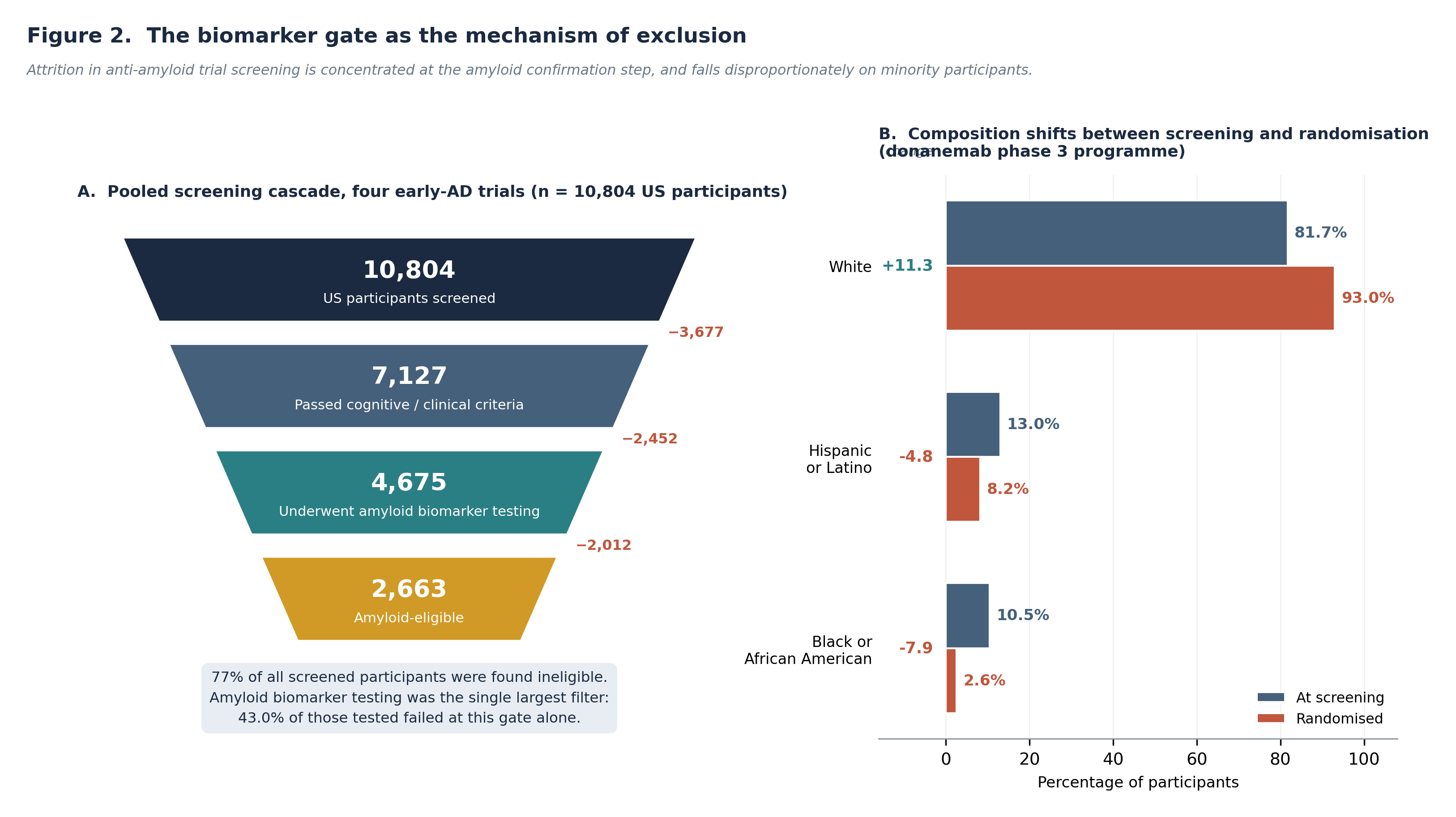
Results: Disparity is generated predominantly at the biomarker confirmation step rather than at referral or prescription. In pooled screening data from four early-Alzheimer trials comprising 10,804 United States participants, 77% were found ineligible; amyloid biomarker testing was the largest single filter, excluding 2,012 of 4,675 tested participants (43.0%), with elevated probability of biomarker ineligibility among Hispanic and non-Hispanic Black participants.6 In the donanemab phase 3 programme, Black participants comprised 10.5% of those screened but 2.6% of those randomised, while White participants rose from 81.7% to 93.0%.9 A paradox underlies this: among 5,757 cognitively impaired adults in a national imaging registry, amyloid positron emission tomography positivity was 50.1% in Black and 45.6% in Latinx participants against 60.0% in all other groups, despite Black and Latinx participants having lower cognitive scores and more frequent dementia diagnoses; measured social determinants did not explain the difference.12 Blood-based biomarkers do not resolve this. In a preclinical trial screening 6,437 participants, odds of ineligibility on a plasma p-tau217 ratio algorithm, relative to non-Hispanic White participants, were 2.88 (95% CI 1.40–6.96) for Hispanic Black, 2.10 (95% CI 1.37–3.38) for non-Hispanic Asian, 1.60 (95% CI 1.33–1.92) for Hispanic White and 1.59 (95% CI 1.27–2.00) for non-Hispanic Black participants.13 Plasma p-tau217 concentrations are additionally raised by reduced kidney function and anemia independently of amyloid burden.17,18 Beyond eligibility, delivery infrastructure is unevenly distributed: neurologists practise disproportionately in metropolitan areas, and early real-world cohorts of treated patients have been predominantly White and urban.20,22
Conclusions: Inequity in disease-modifying Alzheimer’s therapy is produced principally by an amyloid-gated eligibility architecture that admits minoritised patients at systematically lower rates, compounded by geographically concentrated delivery infrastructure. The lower amyloid positivity observed in these populations despite greater clinical impairment suggests that a larger share of their dementia burden is non-amyloid — plausibly vascular and mixed — in origin. If so, the equitable response is not solely to widen access to amyloid-targeting therapy but to invest proportionately in the modifiable vascular pathways that account for more of their disease, and to develop population-calibrated biomarker thresholds before current cut-points are entrenched in clinical practice.
Keywords: Alzheimer’s disease; lecanemab; donanemab; anti-amyloid therapy; amyloid PET; p-tau217; blood-based biomarkers; health disparities; clinical trial diversity; rural health; health equity
Introduction
A therapeutic era that arrived with a gate attached
For three decades, treatment for Alzheimer’s disease was symptomatic. Cholinesterase inhibitors and memantine could be prescribed on clinical grounds by any physician, required no confirmatory biomarker, no infusion suite and no imaging surveillance. Their benefits were modest, but their access architecture was flat: the barrier to receiving them was a diagnosis, and the diagnosis could be made in a primary care office.
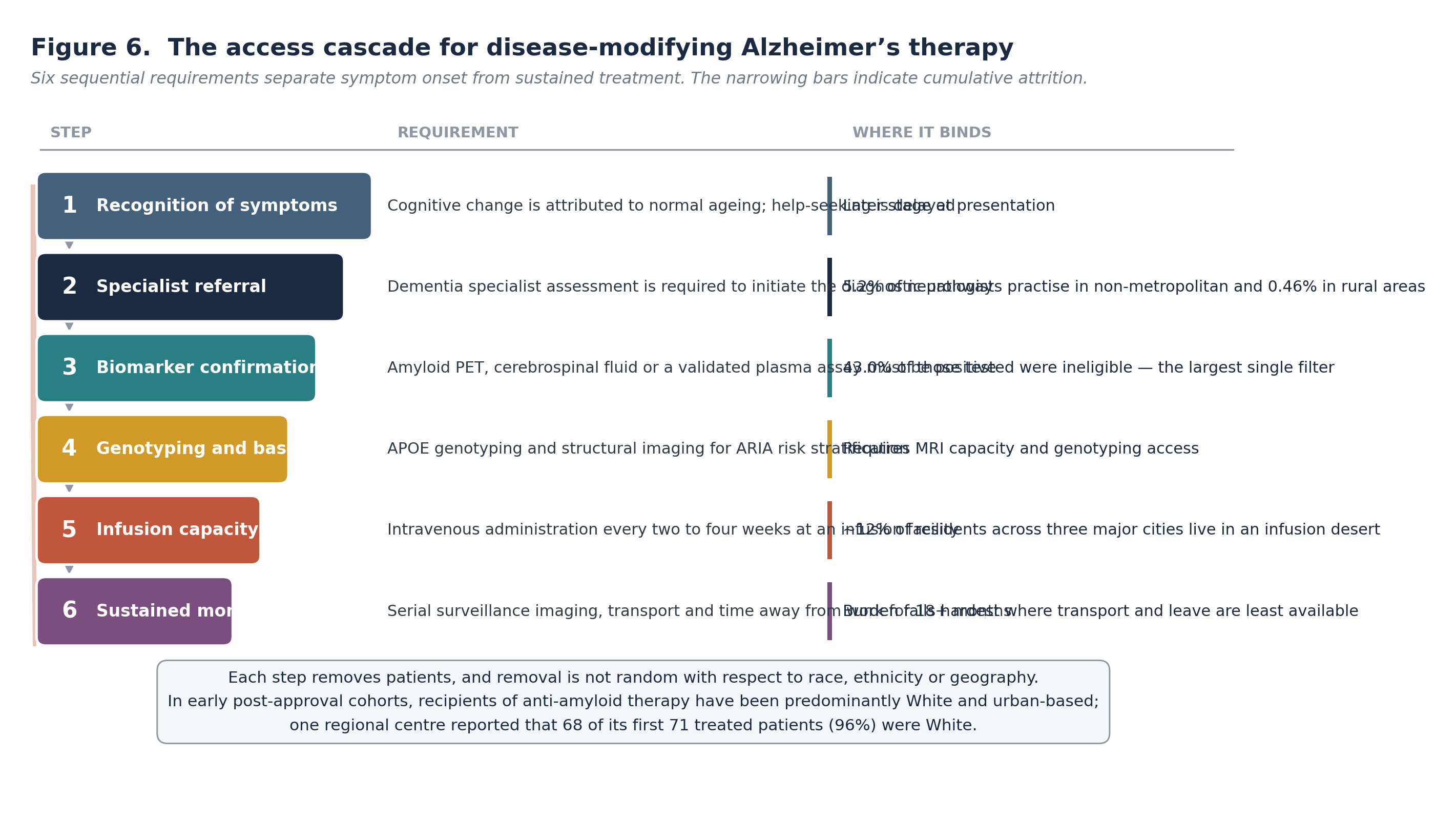
Anti-amyloid monoclonal antibodies changed that architecture fundamentally. To be prescribed one, a patient must have biologically confirmed amyloid pathology, established by positron emission tomography, cerebrospinal fluid analysis or a validated blood-based assay. To receive it safely, that patient needs apolipoprotein E genotyping for risk stratification, a baseline magnetic resonance imaging scan, access to an infusion facility every two to four weeks, and serial imaging surveillance for amyloid-related imaging abnormalities across eighteen months or longer.4,5
Each of those requirements is clinically justified. Collectively, they constitute a filter of considerable selectivity, and filters are rarely neutral with respect to who passes through them. This review is concerned with the distributional consequences of that filter.
Why this is an equity question, and a distinctive one
Disparities in dementia care are well documented: minoritised populations receive later diagnoses, are less likely to be prescribed anti-dementia medication, and are less likely to be referred to specialist services.2,3 The conventional account attributes these gaps to access — insurance coverage, specialist availability, mistrust, language, transport.
The disease-modifying era introduces a mechanism that is different in kind. If eligibility is gated on a biomarker, and if that biomarker is distributed differently across populations, or is measured with differential accuracy across populations, then disparity is generated not by unequal access to a service but by the diagnostic criterion itself. A patient can reach the specialist, obtain the scan and still be excluded — and be excluded by a test that is functioning exactly as designed.
This distinction matters because the remedies differ. Access disparities are addressed by expanding capacity. Criterion-generated disparities are addressed only by interrogating the criterion.
Objectives
This review therefore sets out to:
- Characterise the representation of racial and ethnic minority and rural populations in the pivotal trials of disease-modifying Alzheimer’s therapy;
- Identify at which specific step in the screening and eligibility pathway differential exclusion occurs;
- Examine the evidence on differential amyloid biomarker positivity across populations, and its interpretation;
- Evaluate whether blood-based biomarkers are likely to narrow or widen eligibility disparity;
- Map the post-eligibility access architecture, including specialist, imaging and infusion capacity; and
- Identify the intervention points and evidence gaps of highest priority.
Methods
Design and reporting
This is a structured review with thematic narrative synthesis. Narrative synthesis was selected a priori because the constituent evidence spans randomised trial screening data, national imaging registries, community-based biomarker cohorts, administrative access analyses and regulatory documents, with heterogeneous population definitions, biomarker platforms and outcome measures. Quantitative pooling across these designs would produce an estimate of low interpretability. Reporting follows the PRISMA 2020 statement.30
Data sources and search strategy
PubMed, Embase, Web of Science and Scopus were searched for records published between 1 January 2015 and 31 July 2026. The period start was set to precede the pivotal anti-amyloid trial programmes. The search combined four concept blocks: a therapeutic block, a biomarker block, a disparities block and a geography block, using controlled vocabulary and free-text terms. Reference lists of appropriate use recommendations, regulatory decisions and prior reviews were hand-searched. The full architecture appears in Table B.
Eligibility criteria
Eligible sources examined adults aged 50 years and over and reported eligibility, biomarker distribution or performance, treatment initiation, or access-relevant infrastructure, stratified by race, ethnicity or urban–rural residence. Eligible designs included randomised trials and their screening or secondary analyses, prospective and retrospective cohorts, imaging and biomarker registries, cross-sectional access analyses and rigorous evidence syntheses. Full criteria appear in Table C.
Study selection and quality appraisal
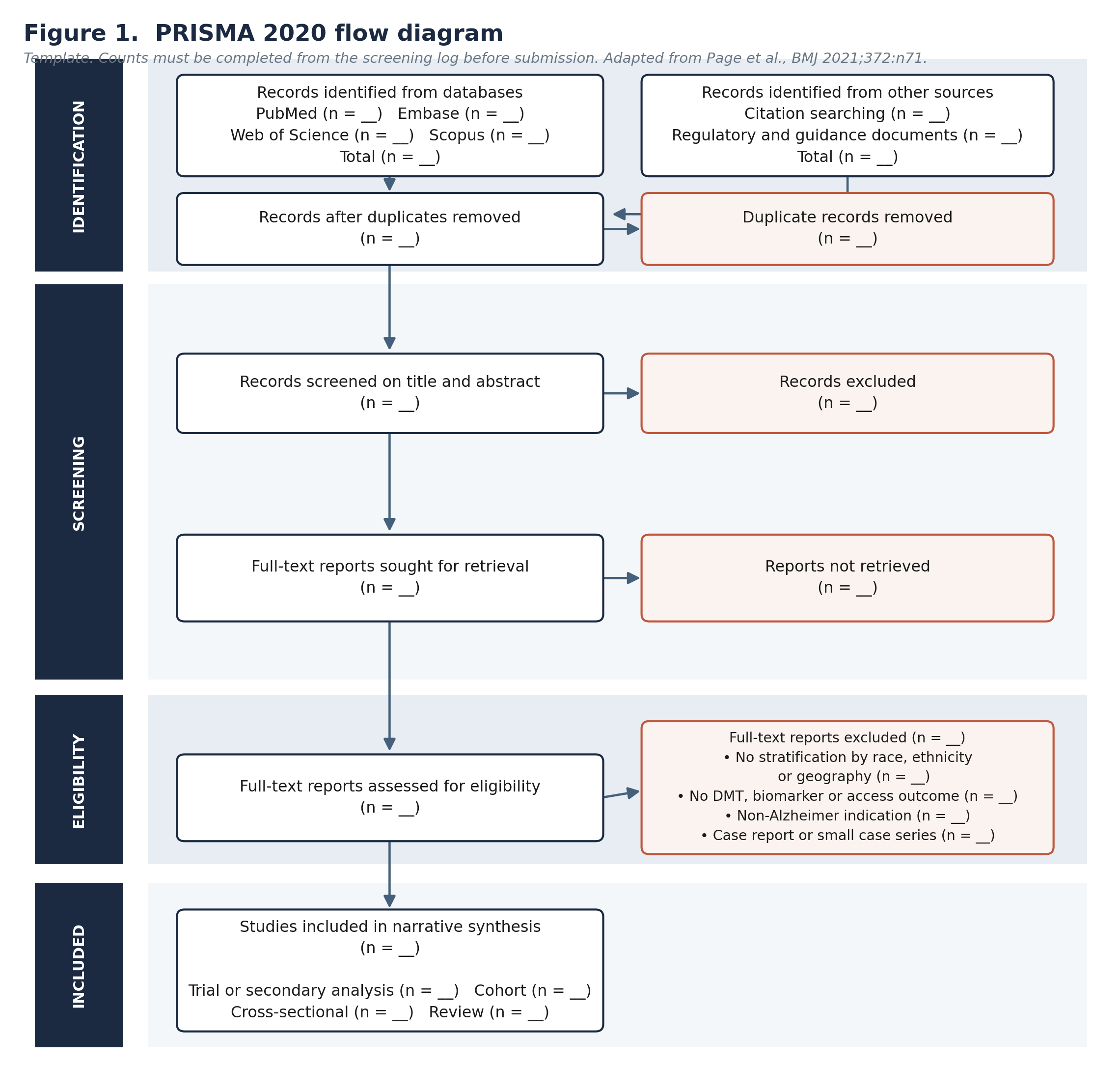
Records were screened on title and abstract against the criteria in Table C, followed by full-text assessment. Quality was appraised using design-appropriate instruments: the Newcastle–Ottawa Scale for observational studies, the Cochrane Risk of Bias 2 tool for randomised trials, QUADAS-2 for diagnostic accuracy studies, and AMSTAR-2 for evidence syntheses. Appraisal informed synthesis weight rather than exclusion. Selection is summarised in Figure 1.
Data extraction and synthesis
Data were extracted against the framework in Table D and organised into thematic domains corresponding to sequential steps in the eligibility and access pathway. Where multiple sources addressed a step, precedence was given to large trial screening datasets, national registries and community-based cohorts oversampling minoritised populations.
Results
Representation in the pivotal trials
Trial sponsors made deliberate and partially successful efforts to recruit diverse cohorts. In the lecanemab pivotal trial, 4.5% of United States randomised participants were Black and 22.5% were Hispanic, and the sponsor characterised the resulting cohort as broadly comparable to the United States Medicare population.4 These figures represent a genuine improvement on historical Alzheimer’s trial enrolment.
They nonetheless understate the recruitment effort expended, because they describe who was randomised rather than who was approached. The distinction between the screened and the randomised population is where the substantive finding of this review lies.
The eligibility funnel: where participants are lost
Pooled screening data from four randomised trials in early Alzheimer’s disease, comprising 10,804 United States participants, permit the exclusion pathway to be decomposed.6 The screened population was 65% non-Hispanic White, 25% Hispanic White, 7% non-Hispanic Black, 2% Hispanic Black and 1% non-Hispanic Asian. Overall, 77% of those screened were found ineligible.
The decomposition of that 77% is instructive. Cognitive or clinical criteria were the most frequently recorded single reason for ineligibility in absolute terms (n = 3,677, 34.5%). Magnetic resonance imaging criteria excluded relatively few participants (n = 387, 6.9%), and — notably — did not differ significantly across racial and ethnic groups. But amyloid biomarker testing produced the highest proportional exclusion of any step: of 4,675 participants who underwent amyloid testing, 2,012 (43.0%) were ineligible on that basis alone. After accounting for age, sex and trial, and using non-Hispanic White participants as the reference, the probability of ineligibility on amyloid biomarker criteria was elevated among Hispanic and non-Hispanic Black participants.
The consequence is visible in the composition shift between screening and randomisation. In the donanemab phase 3 programme, participants identifying as Black or African American constituted 10.5% of those screened but 2.6% of those randomised; Hispanic or Latino participants fell from 13% to 8.2%; White participants rose from 81.7% to 93.0%.9 In the AHEAD 3-45 preclinical programme, 20,721 individuals were screened to randomise 1,621; 27% of those screened were from underrepresented ethnoracial groups, approaching the national population share, but only 15% and 11% of those ultimately enrolled in the two study arms.9
Recruitment, in other words, is not the binding constraint. Sponsors succeeded in bringing diverse populations to screening. The losses occur inside the screening process, and predominantly at one step.
The amyloid paradox
The reason minoritised participants fail the amyloid gate more often is not that they have less dementia. Evidence from several independent sources indicates the opposite pattern, and it constitutes the central empirical puzzle of this field.
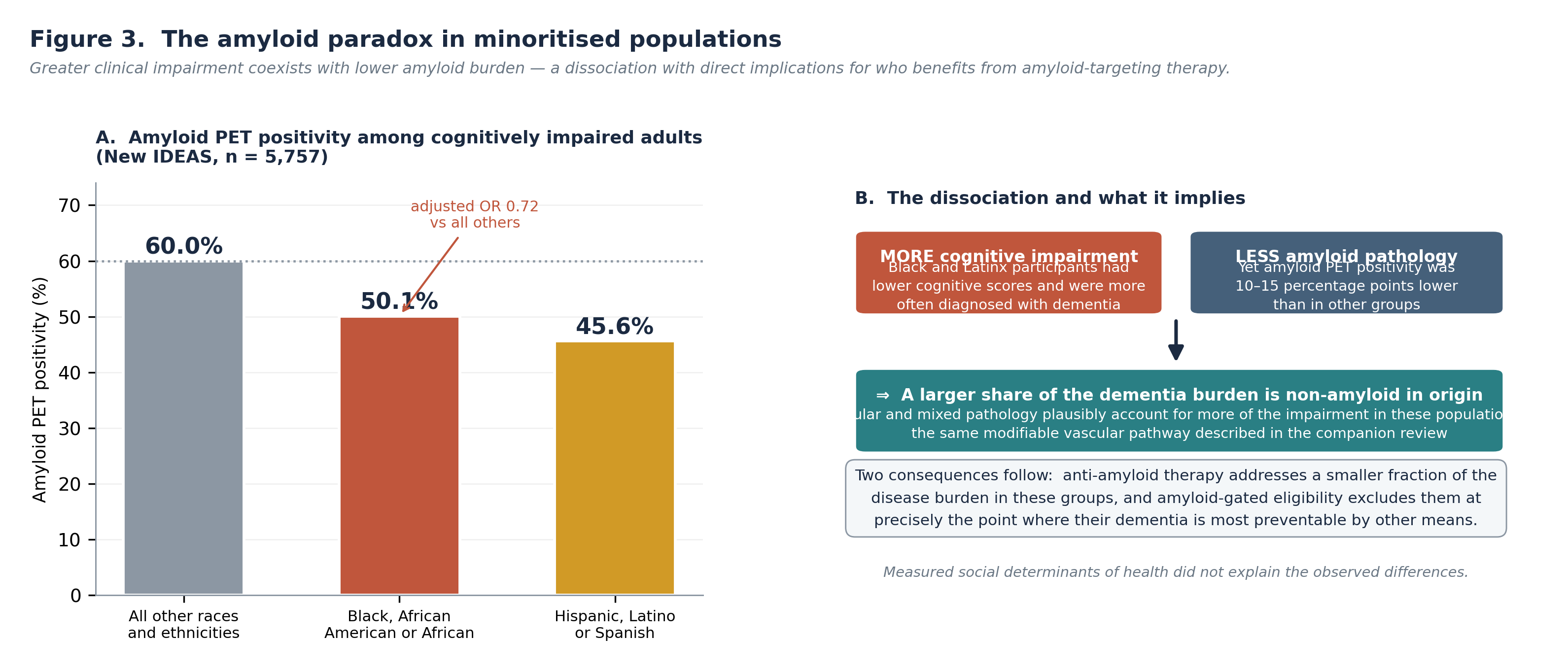
In a large national imaging registry of 5,757 cognitively impaired older adults — 1,248 Black or African American, 1,166 Hispanic or Latinx, and 3,343 of all other races and ethnicities — amyloid positron emission tomography positivity was 60.0% among the all-other group, 50.1% among Black participants and 45.6% among Latinx participants, with an adjusted odds ratio of 0.72 for Black relative to all other participants. Black and Latinx participants were simultaneously more likely to carry a dementia diagnosis and to have lower cognitive test scores. Measured social determinants of health did not account for the differences.12
The pattern is consistent with earlier findings. In the A4 preclinical trial, among 3,689 non-Hispanic White and 144 non-Hispanic Black participants undergoing amyloid imaging, Black participants had lower rates of amyloid positivity and lower continuous amyloid levels after adjustment for age, sex and apolipoprotein E genotype; the effect was strongest among APOE ε4 carriers, and within Black participants, lower proportional African ancestry was associated with higher amyloid.11 Independent florbetaben imaging cohorts have replicated lower amyloid standardised uptake value ratios in non-Hispanic Black relative to non-Hispanic White adults despite poorer memory performance.15
The interpretation carries substantial consequence. If Black and Latinx patients present with greater cognitive impairment but less amyloid, the most parsimonious explanation is that a larger proportion of their dementia burden is attributable to non-amyloid pathology — vascular disease, mixed pathology, or both. This is precisely consonant with evidence that vascular contributions to cognitive impairment are elevated in these populations, and with the modifiable vascular pathway described in the companion review in this journal.
Two consequences follow. First, amyloid-targeting therapy addresses a smaller share of the total disease burden in these populations, so equal access to it would not produce equal benefit. Second, and more troublingly, the amyloid gate excludes these patients at precisely the point where their dementia is most attributable to causes that are preventable by other means — and the exclusion is silent, recorded as biomarker negativity rather than as unmet need.
Blood-based biomarkers: solution or amplifier?
Plasma biomarkers, particularly phosphorylated tau 217, have been widely anticipated as the intervention that will dissolve access barriers to biological diagnosis. A venepuncture in a primary care clinic is available almost everywhere that amyloid positron emission tomography is not. The expectation that this will reduce disparity is intuitive and, on current evidence, premature.
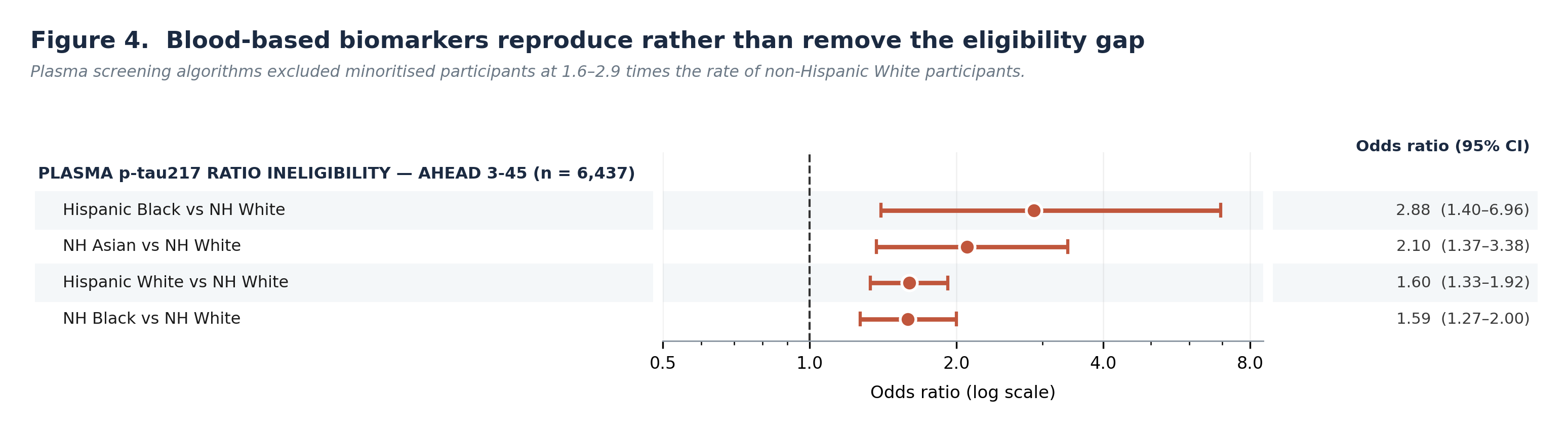
In the AHEAD 3-45 programme, plasma screening using an algorithm incorporating the p-tau217 to non-phosphorylated tau217 ratio, amyloid beta 42/40, age and apolipoprotein E genotype was applied to 6,437 screened participants. Relative to non-Hispanic White participants, the odds of plasma ineligibility were 2.88 (95% CI 1.40–6.96) for Hispanic Black participants, 2.10 (95% CI 1.37–3.38) for non-Hispanic Asian participants, 1.60 (95% CI 1.33–1.92) for Hispanic White participants and 1.59 (95% CI 1.27–2.00) for non-Hispanic Black participants.13
One further detail from that analysis is decisive for interpretation: once participants had passed the plasma screen, subsequent positron emission tomography-confirmed amyloid eligibility did not differ across groups.14 The differential is therefore generated by the plasma algorithm itself rather than by underlying amyloid distribution among those it admits. A screening instrument intended to widen the funnel is, at its current calibration, narrowing it selectively.
Why plasma thresholds do not transfer across populations
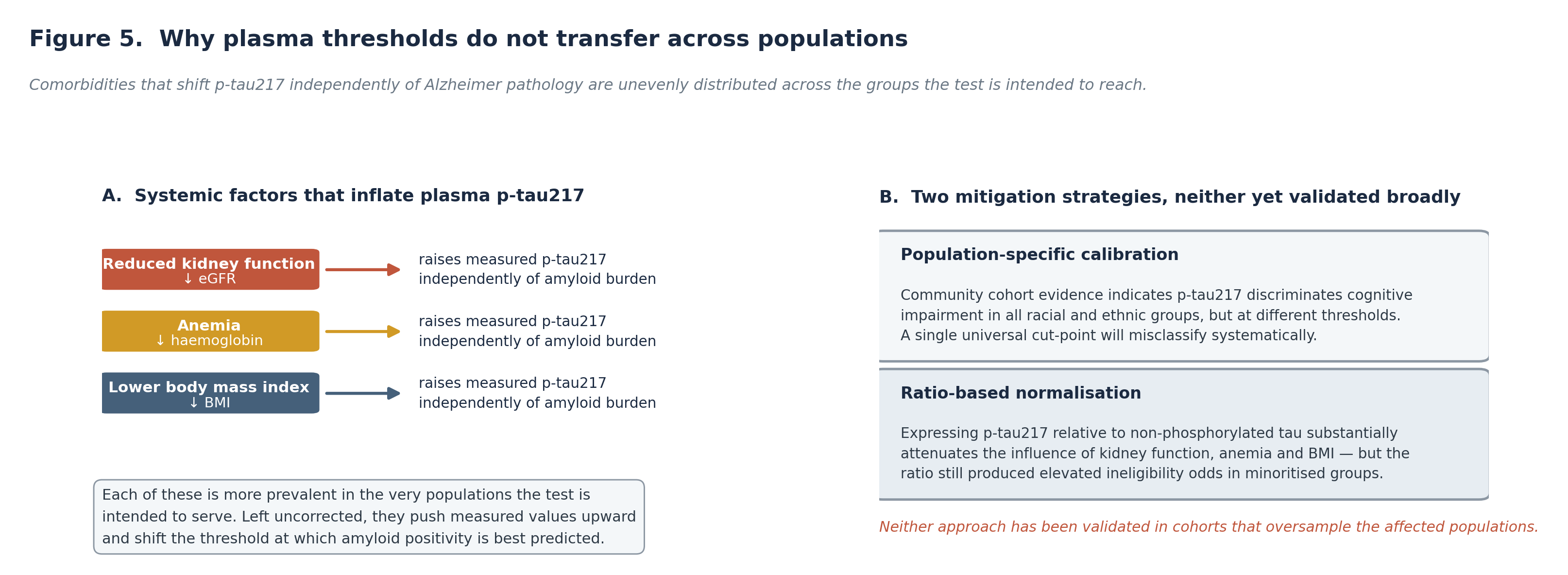
Two mechanisms plausibly underlie the differential performance, and both are tractable.
The first is comorbidity confounding. Plasma p-tau217 concentrations are inversely associated with estimated glomerular filtration rate, body mass index and haemoglobin, independently of amyloid burden; kidney dysfunction and anemia raise baseline concentrations and necessitate upward adjustment of diagnostic thresholds to preserve accuracy.17 In a cohort of 233 predominantly cognitively unimpaired Black adults, p-tau217 was elevated in association with impaired kidney function and cardiovascular disease, though not with obesity or diabetes.18 Chronic kidney disease, anemia and cardiovascular disease are all more prevalent in the populations that plasma testing is intended to reach. A threshold derived in a cohort without those comorbidities will misclassify systematically when applied to a cohort with them.
The second is threshold non-transferability. In a community-based cohort of 2,798 non-Hispanic White, non-Hispanic Black and Hispanic adults, plasma p-tau217 was robustly associated with cognitive impairment in every racial and ethnic group — but the optimal discriminating threshold differed between groups, and discriminative accuracy was modest.16 The authors concluded that population-specific calibration is required for equitable implementation. A related analysis of 2,052 clinically unimpaired participants from the same cohort found that non-Hispanic White participants had higher p-tau217 concentrations yet better cognitive performance than Black and Hispanic participants — a dissociation between biomarker burden and clinical expression that mirrors the amyloid paradox described above.19
Expressing p-tau217 as a ratio to non-phosphorylated tau substantially attenuates the influence of systemic factors and is currently the most promising mitigation.17 It is notable, however, that the AHEAD 3-45 analysis which found elevated ineligibility odds already used a ratio-based algorithm.13 Ratio normalisation reduces the problem; on present evidence it does not eliminate it.
The access cascade beyond eligibility
Biomarker eligibility is necessary but not sufficient. A patient who passes the gate must then reach a delivery system that is geographically concentrated.
Specialist distribution is markedly uneven: neurologists practise overwhelmingly in metropolitan areas, with approximately 5.2% in non-metropolitan and 0.46% in rural communities.20 Infusion capacity is similarly concentrated. An analysis of three large, ethnically diverse metropolitan areas found that approximately 12% of residents live in an “infusion desert,” defined as an area more than five miles from the nearest infusion centre, with a higher proportion of Hispanic or Latino residents in desert than in non-desert tracts; the authors estimated that roughly 18,000 people aged 65 and over with amyloid-positive mild cognitive impairment and 8,000 with amyloid-positive mild Alzheimer’s disease live in such areas across those three cities alone.21 Because this analysis was confined to metropolitan areas, it almost certainly understates the rural position.
Implementation reports from academic centres identify the practical constraints consistently: limited availability of appropriate magnetic resonance imaging, constrained infusion capacity, lack of reimbursement for blood-based Alzheimer’s tests and amyloid imaging, and difficulties with private insurers.23 These are capacity problems rather than attitudinal ones, and they bind hardest where capacity is thinnest.
Real-world uptake
Early post-approval evidence indicates that the cumulative filter operates as the preceding sections would predict. An observational analysis of initial real-world lecanemab use found recipients to be predominantly White and urban-based, with minoritised and rural patients relatively underrepresented.20 A regional medical centre reported that among its first 71 patients treated with lecanemab, 68 (96%) were White.22 A population-based cohort study applying trial eligibility criteria to a community sample found that the sample itself was 97.5% White, and that lecanemab inclusion criteria reduced an amyloid-positive early Alzheimer’s population of 237 to 112 participants (47.3%).24
These are early, small and single-centre observations and should not be over-interpreted. They are, however, uniformly consistent in direction, and consistent with the mechanism identified upstream.
What the evidence does not show
Three negative findings deserve explicit statement, because their absence from discussion has permitted weaker claims to circulate.
- Magnetic resonance imaging exclusion criteria did not differ significantly across racial and ethnic groups in the pooled trial screening data, despite the expectation that differential cerebrovascular burden would produce such a difference.6 The authors could not exclude differential exclusion prior to screening, or differences in more subtle vascular injury.
- Differential amyloid positivity was not explained by measured social determinants of health in the largest registry analysis available.12 Whether unmeasured social exposures, ancestry-related biology, differential diagnostic accuracy or competing pathology accounts for it remains open.
- No evidence identified in this review demonstrates differential efficacy of anti-amyloid therapy by race or ethnicity among treated patients. The pivotal trial reported consistency of effect across subgroups.5 The equity problem documented here concerns who reaches treatment, not whether treatment works differently in those who do.
Discussion
Principal findings
Four conclusions follow from the synthesis. First, inequity in disease-modifying Alzheimer’s therapy is generated principally at the biomarker confirmation step rather than at recruitment, referral or prescription; sponsors succeeded in bringing diverse populations to screening, and lost them inside it. Second, the underlying pattern is paradoxical: minoritised patients present with greater clinical impairment and lower amyloid burden, implying that a larger fraction of their dementia is non-amyloid in origin. Third, blood-based biomarkers at current calibration reproduce and in some comparisons amplify the eligibility gap, and are confounded by comorbidities unevenly distributed across the target populations. Fourth, the delivery infrastructure required for safe administration is geographically concentrated, compounding the eligibility filter with an access filter.
The central tension
The findings pose an uncomfortable question that the field has largely deferred: is the amyloid gate excluding minoritised patients wrongly, or correctly?
If the gate is functioning accurately — if these patients genuinely have less amyloid pathology — then excluding them from amyloid-targeting therapy is clinically correct, and the equity failure lies elsewhere: in three decades of research investment concentrated on a pathological pathway that accounts for proportionally less of the dementia burden in the populations at highest risk. On this reading, the remedy is not wider access to anti-amyloid therapy but redirected investment toward the vascular and mixed pathologies that account for more of their disease.
If instead the gate is functioning inaccurately — if amyloid assays and plasma algorithms calibrated in predominantly White cohorts systematically underdetect pathology in others — then the exclusion is a measurement failure with direct clinical consequence, and the remedy is population-specific calibration undertaken urgently, before current thresholds become embedded in routine practice and reimbursement policy.
The available evidence does not decisively adjudicate between these. The finding that positron emission tomography-confirmed eligibility did not differ among those who passed plasma screening14 suggests the plasma layer specifically introduces error. The finding that imaging-based positivity differs even with direct measurement11,12 suggests a real biological difference in amyloid burden. Both may be true simultaneously, at different layers of the diagnostic stack. Distinguishing them is, in the view of this review, the single highest-priority research question in the field.
Implications for clinical practice
- Interpret a negative amyloid biomarker in a cognitively impaired minoritised patient as an indication to investigate non-amyloid causes, not as an endpoint. The evidence indicates elevated likelihood of vascular or mixed pathology in this circumstance.
- When using plasma biomarkers, record and account for estimated glomerular filtration rate, haemoglobin and body mass index, which shift measured p-tau217 independently of amyloid burden.17,18
- Prefer ratio-normalised plasma assays over absolute p-tau217 concentrations where available, while recognising that ratio normalisation has not eliminated differential ineligibility.13,17
- Treat a negative plasma screen as a screening rather than a diagnostic result in populations where the threshold has not been validated, and retain a low threshold for confirmatory imaging or cerebrospinal fluid testing.
- Anticipate the logistical burden of eighteen months of biweekly infusion and serial imaging at the point of counselling, particularly for patients with transport, employment or caregiving constraints, rather than after initiation.
Policy and health system implications
Three directions follow. First, biomarker validation cohorts should be required to demonstrate adequate representation of the populations in which the assay will be deployed, and to report threshold performance by population, before thresholds are adopted into coverage criteria. Diagnostic equity is currently regulated less stringently than therapeutic equity, though its distributional consequences are at least as large.
Second, infusion and imaging capacity planning should incorporate explicit equity analysis. Infusion desert mapping is straightforward, has been demonstrated in metropolitan areas,21 and has not to our knowledge been undertaken systematically for rural populations.
Third, and most consequentially, if the amyloid paradox reflects genuine differences in the pathological composition of dementia across populations, then research funding allocation should reflect that composition. A portfolio weighted heavily toward amyloid-targeting intervention will deliver progressively less benefit to the populations with the highest dementia burden.
Research gaps
- Adjudicating the paradox. Autopsy-validated studies in diverse cohorts are required to establish whether lower amyloid positivity reflects genuinely lower amyloid pathology or differential assay performance.
- Population-specific threshold derivation. Plasma p-tau217 thresholds require derivation and prospective validation in cohorts that oversample Black, Hispanic, South Asian and rural populations, with explicit adjustment for renal function and anemia.
- Trials in biomarker-negative impaired patients. The population excluded by the amyloid gate is large, disproportionately minoritised, and currently has no disease-modifying option under investigation. Vascular-targeted intervention trials in this group are absent.
- Rural infusion desert mapping, which has not been conducted at national scale despite the demonstrated feasibility of the method.
- Prospective equity monitoring of real-world treatment registries, reporting initiation and retention stratified by race, ethnicity and rurality as a standing requirement rather than an occasional analysis.
Strengths and limitations
The principal strength of this review is its decomposition of the eligibility pathway into discrete steps, which localises where disparity is generated rather than documenting that it exists. Evidence is drawn preferentially from large trial screening datasets, national registries and community cohorts designed to oversample minoritised populations.
Several limitations require acknowledgement. First, the synthesis is narrative; no pooled estimate is offered and none should be inferred. Second, the evidence base is almost entirely from the United States, and the access architecture described — Medicare coverage, private insurance, infusion centre distribution — does not transfer to other health systems, including India, where anti-amyloid therapy is at present largely inaccessible on cost grounds irrespective of eligibility. Third, several key sources are recent, and some are conference abstracts or early real-world reports with small samples and limited peer review; findings from these are reported as directional rather than definitive. Fourth, race and ethnicity are treated in the source literature as categorical variables when they are social constructs imperfectly correlated with the genetic ancestry that may underlie biological differences in amyloid deposition; the A4 ancestry analysis11 illustrates both the importance and the difficulty of this distinction. Fifth, this is a fast-moving field and the evidence base will have changed by the time of publication.
Conclusion
The disease-modifying era in Alzheimer’s disease has introduced a form of inequity that differs in mechanism from those preceding it. Disparity is not principally produced by failure to recruit, refer or prescribe, but by an eligibility architecture gated on a biomarker that admits minoritised patients at systematically lower rates — and by a delivery infrastructure concentrated where those patients disproportionately are not.
The finding that these patients present with greater cognitive impairment and lower amyloid burden is the most important in this review, and the least resolved. It implies either that a substantial share of their dementia is driven by pathology these therapies do not address, or that current assays underdetect pathology in populations underrepresented in their derivation. The two possibilities demand different responses, and the field has not yet done the work required to choose between them.
Until it does, the defensible position is to pursue both: to calibrate biomarker thresholds in the populations they will be used on, and simultaneously to invest in the modifiable vascular pathways that, on present evidence, account for more of the dementia burden among those the amyloid gate turns away.
Declarations
Conflicts of interest: SSK is Director and Publisher, and MSK is Chief Executive Officer, of Lifeline Emed Companies LLC, the publisher of this journal. The manuscript was handled by an independent editor as described on the title page. The authors declare no other competing interests, and no financial relationship with any manufacturer of the therapeutic agents or diagnostic assays discussed.
Data availability: This review analysed only published data. The search strategy, screening log and extraction table are available from the corresponding author on reasonable request.
Ethics approval: Not required; this review analysed previously published aggregate data.
Tables
Table A. Summary of principal evidence by pathway step
Table B. Search architecture
Table C. Eligibility criteria
Table D. Data extraction framework
References
- 2024 Alzheimer’s disease facts and figures. Alzheimers Dement. 2024;20(5):3708-3821.
- Hinton L, Tran D, Nguyen TN, et al. Mapping racial and ethnic healthcare disparities for persons living with dementia: a scoping review. Alzheimers Dement. 2024;20(4):3000-3020.
- Palms JD, Sol K, Zahodne LB. Pathways to racial/ethnic inequalities in dementia. Annu Rev Clin Psychol. 2025;21:113-137.
- van Dyck CH, Swanson CJ, Aisen P, et al. Lecanemab in early Alzheimer’s disease. N Engl J Med. 2023;388(1):9-21.
- Sims JR, Zimmer JA, Evans CD, et al. Donanemab in early symptomatic Alzheimer disease: the TRAILBLAZER-ALZ 2 randomized clinical trial. JAMA. 2023;330(6):512-527.
- Grill JD, Flournoy C, Dhadda S, et al. Eligibility rates among racially and ethnically diverse US participants in phase 2 and phase 3 placebo-controlled, double-blind, randomized trials of lecanemab and elenbecestat in early Alzheimer disease. Ann Neurol. 2024;95(2):288-298.
- Cummings J, Apostolova L, Rabinovici GD, et al. Lecanemab: appropriate use recommendations. J Prev Alzheimers Dis. 2023;10(3):362-377.
- Cummings J, Rabinovici GD, Atri A, et al. Aducanumab: appropriate use recommendations update. J Prev Alzheimers Dis. 2022;9(2):221-230.
- Alzforum. Biomarkers suggest Black and Hispanic people less likely to have amyloid. Conference report, Clinical Trials on Alzheimer’s Disease; 2024.
- Sperling RA, Donohue MC, Raman R, et al. Trial of solanezumab in preclinical Alzheimer’s disease. N Engl J Med. 2023;389(12):1096-1107.
- Deters KD, Napolioni V, Sperling RA, et al. Amyloid PET imaging in self-identified non-Hispanic Black participants of the Anti-Amyloid in Asymptomatic Alzheimer’s Disease (A4) study. Neurology. 2021;96(11):e1491-e1500.
- Bolton CJ, et al. Differences in amyloid PET positivity based on ethnoracial group and social determinants of health: the New IDEAS study. Alzheimers Dement. 2026. doi:10.1002/alz.71406.
- Molina-Henry DP, Raman R, Liu A, et al. Racial and ethnic differences in plasma p-tau217 ratio biomarker eligibility rates in a preclinical AD trial with lecanemab. Alzheimers Dement (Amst). 2025;17(3):e70164.
- Hayes, et al. Plasma p-tau217 and cognitive impairment: evaluating biomarker equity across racial/ethnic groups in HABS-HD. Alzheimers Dement (Amst). 2026;:e70269.
- Amyloid burden in non-Hispanic Black vs White adults: an F18-florbetaben PET study. Alzheimers Dement. 2025;21(Suppl):.
- Hayes, et al. Plasma p-tau217 and cognitive impairment: evaluating biomarker equity across racial/ethnic groups in HABS-HD. Alzheimers Dement (Amst). 2026;:e70269.
- Optimizing plasma p-tau217 cutoffs for amyloid pathology according to biological factors. Alzheimers Dement. 2026;:.
- Ennis, et al. The performance of plasma p-tau217 in Black middle-aged and older adults. Alzheimers Dement. 2025;21(7):e70288.
- Najmi, et al. Associations of plasma p-tau217 with cognitive domain performance in clinically unimpaired participants: evidence from HABS-HD. Alzheimers Dement (Amst). 2026;:e70370.
- Initial real-world evidence for lecanemab in the United States. Drugs Aging. 2025;:. doi:10.1007/s40266-025-01261-x.
- Showell S, Gillis C, Powell L. Geographic disparities in infusion center access for early Alzheimer’s disease patients in the US. Alzheimers Dement. 2025;21(Suppl):.
- Initial experience with lecanemab and lessons learned in 71 patients in a regional medical center. J Prev Alzheimers Dis. 2024;:.
- The first year of amyloid immunotherapy in an academic dementia specialty practice. Alzheimers Dement. 2025;21(Suppl):.
- Eligibility for anti-amyloid treatment in a population-based study of cognitive aging. Neurology. 2023;101(19):e1837-e1849.
- Anti-amyloid therapies for Alzheimer’s disease: progress, pitfalls, and the path ahead.. 2025;:.
- Health care disparities in Alzheimer disease diagnosis and the use of amyloid-targeting treatments. Pract Neurol. 2024;:.
- Rabinovici GD, Gatsonis C, Apgar C, et al. Association of amyloid positron emission tomography with subsequent change in clinical management among Medicare beneficiaries with mild cognitive impairment or dementia. JAMA. 2019;321(13):1286-1294.
- Livingston G, Huntley J, Liu KY, et al. Dementia prevention, intervention, and care: 2024 report of the Lancet standing Commission. Lancet. 2024;404(10452):572-628.
- Jack CR Jr, Andrews JS, Beach TG, et al. Revised criteria for diagnosis and staging of Alzheimer’s disease: Alzheimer’s Association Workgroup. Alzheimers Dement. 2024;20(8):5143-5169.
- Page MJ, McKenzie JE, Bossuyt PM, et al. The PRISMA 2020 statement: an updated guideline for reporting systematic reviews. BMJ. 2021;372:n71.
- Thomas J, Harden A. Methods for the thematic synthesis of qualitative research in systematic reviews. BMC Med Res Methodol. 2008;8:45.
- Popay J, Roberts H, Sowden A, et al. Guidance on the Conduct of Narrative Synthesis in Systematic Reviews. ESRC Methods Programme; 2006.
- Whitside DJ, et al. Sex differences in amyloid pathology by race, ancestry, and apolipoprotein E ε4 in an admixed autopsy sample. JAMA Neurol. 2026;:.
- Churchwell K, Elkind MSV, Benjamin RM, et al. Call to action: structural racism as a fundamental driver of health disparities: a presidential advisory from the American Heart Association. Circulation. 2020;142(24):e454-e468.